top of page
Learning and Teaching

As a MACS school, St Catherine's are committed to developing learners who are curious, creative, critical thinkers able to confidently communicate, collaborate and respond within local and global communities.

The MACS Vision for Instruction and Vision for Engagement and Flourishing Learners position statements , align with the MACS 2030 strategic plan. They communicate MACS’ system-wide, evidence-based approach to supporting students to be actively engaged in their learning, equipping them to flourish and make meaningful contributions to the world. 

These position statements support St Catherine’s to focus on the two system goals articulated in Vision for Instruction (MACS 2024):

Goal 1 – Excellence: All MACS schools deliver a knowledge-rich, evidence based teaching and learning program. 

Goal 2 – Equity: Every student, regardless of background, achieves literacy and numeracy proficiency.

We believe:

Successful learners…

  • play an active role in their own learning

  • develop the essential skills in literacy and numeracy

  • are creative and productive users of technology

  • can reflect, think deeply and apply new knowledge and skills

  • are creative, innovative and resourceful, and are able to solve problems 

  • can work independently and collaborate with others

  • communicate ideas

  • embrace challenges

  • view mistakes as part of the process of learning

  • have a growth mindset to learning

Confident and creative individuals…

  • have a sense of self-worth, self-awareness and personal identity that enables them to manage their emotional, mental, spiritual and physical wellbeing

  • have a sense of optimism about their lives and the future

  • are enterprising, show initiative and use their creative abilities

  • develop personal values and attributes such as honesty, resilience, empathy and respect for others

  • have the knowledge, skills, understanding and values to establish healthy and satisfying lives

  • relate well to others and form and maintain healthy relationships

  • are well prepared for their potential life roles as family, community and workforce members

  • embrace opportunities, make rational and informed decisions about their own lives and accept responsibility for their own actions.

Active and informed citizens…

  • act with moral and ethical integrity

  • appreciate Australia’s social, cultural, linguistic and religious diversity, and have an understanding of Australia’s system of government, history and culture

  • understand and acknowledge the value of Indigenous cultures and possess the knowledge, skills and understanding to contribute to, and benefit from, reconciliation between Indigenous and non-Indigenous Australians

  • are committed to national values of democracy, equity and justice, and participate in Australia’s civic life

  • are able to relate to and communicate across cultures, especially the cultures and countries of Asia

  • work for the common good, in particular sustaining and improving natural and social environments

  • are responsible global and local citizens.

Known. Valued. Flourishing

Copy of IMG_4108.JPG
IMG_2994.JPG
Learning Environment

 The learning environment at St Catherine’s provides opportunities for students to explore their interests, challenge themselves and develop deeper understandings of the world around them. At St Catherine’s expert teaching and learning is evidenced by a shared responsibility to develop the whole child.  Individual student’s needs are supported through a differentiated curriculum. 

Expert Learning and Teaching at St Catherine’s Moorabbin is characterised by:

Vision for Instruction promotes a knowledge-rich, evidence-based approach to instruction that requires deliberate planning, content sequencing and alignment with how students learn. Effective teaching builds on prior knowledge, manages cognitive load and uses explicit instruction methods – such as modelling, guided practice and formative assessment – to ensure deep understanding and retention.

  • a shared understanding of students - how they learn and grow academically, socially and emotionally

  • collaboration between staff members, parents and the wider community

  • engaging students in meaningful and relevant differentiated learning experiences

  • providing feedback for improvement and learning​

Expert Learning and Teaching at St Catherine’s Moorabbin is informed by:​​

  • Gospel values and teachings of the Catholic Church

  • The Victorian Curriculum 2.0

  • Melbourne Archdiocese Catholic Schools MACS 2030: Forming Lives to Enrich the World

  • Melbourne Archdiocese Catholic Schools- Vision for Instruction Flourishing Learners Position Statement

  • Ongoing student assessments

Literacy

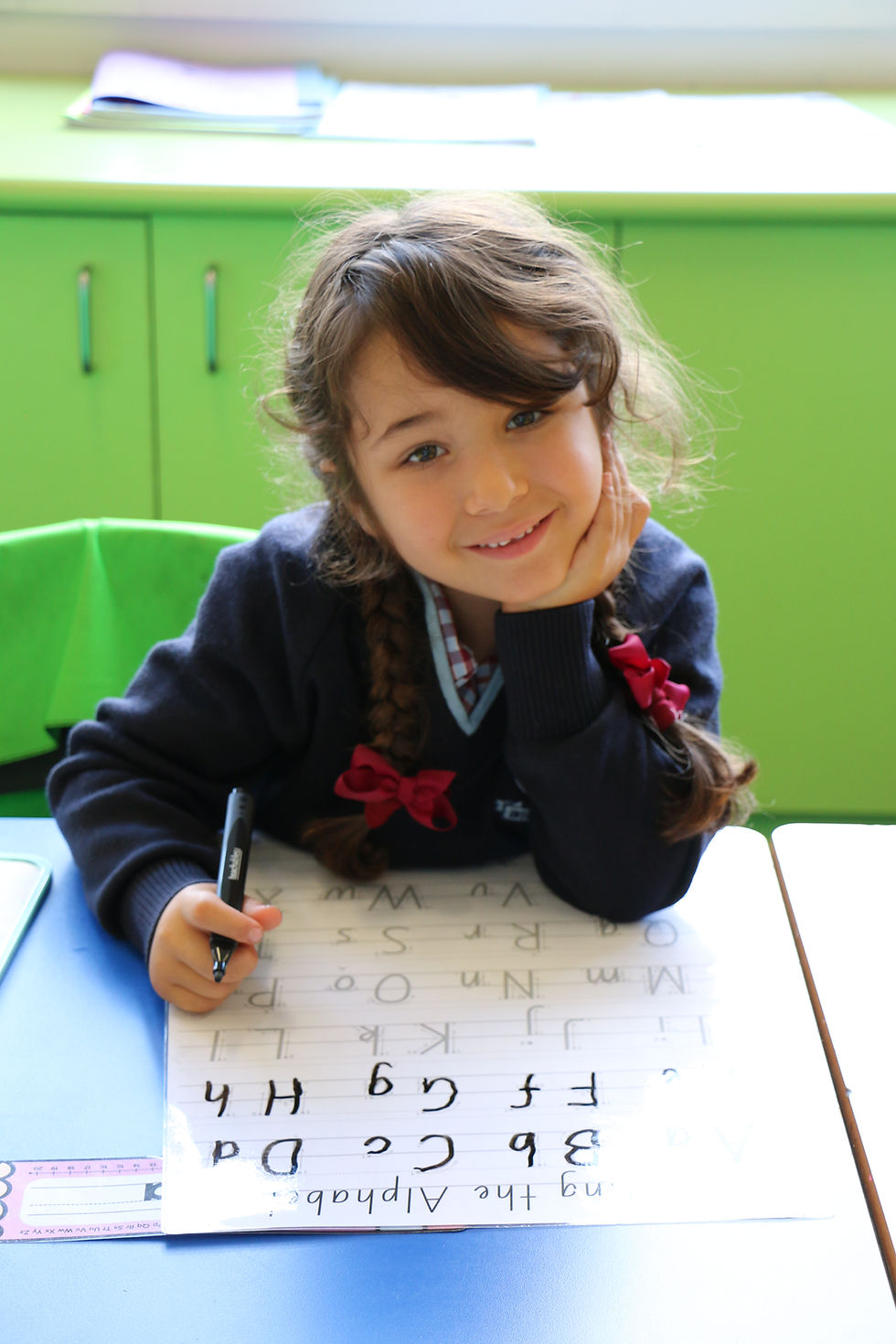
At our school, literacy is a foundation for learning across all areas of the curriculum. We are committed to developing confident readers, writers and communicators through a structured and explicit approach to teaching literacy.

Our teaching is guided by evidence-based practices aligned with the Science of Reading, ensuring students receive clear, systematic instruction in reading, writing and spelling. Teachers explicitly model new skills, provide guided practice and give students opportunities to apply their learning independently.

In the early years, students participate in a structured synthetic phonics program, learning how sounds and letters work together to decode (read) and encode (spell) words. We support this learning through resources such as; Little Learners Love Literacy and UFLI Foundations, which provide carefully sequenced lessons that develop phonemic awareness, phonics knowledge, fluency and spelling.

As students progress through the school, literacy learning continues to build through explicit teaching of vocabulary, grammar, sentence structure, writing and comprehension strategies. Students learn to plan, draft, revise and publish their writing across a range of text types, enabling them to communicate ideas clearly and effectively.

Through explicit teaching, structured practice and rich learning experiences, we aim to nurture curious, capable learners who use literacy confidently to learn, think and communicate with others.

IMG_3313.HEIC
IMG_3504.JPG
IMG_4273.HEIC
Numeracy

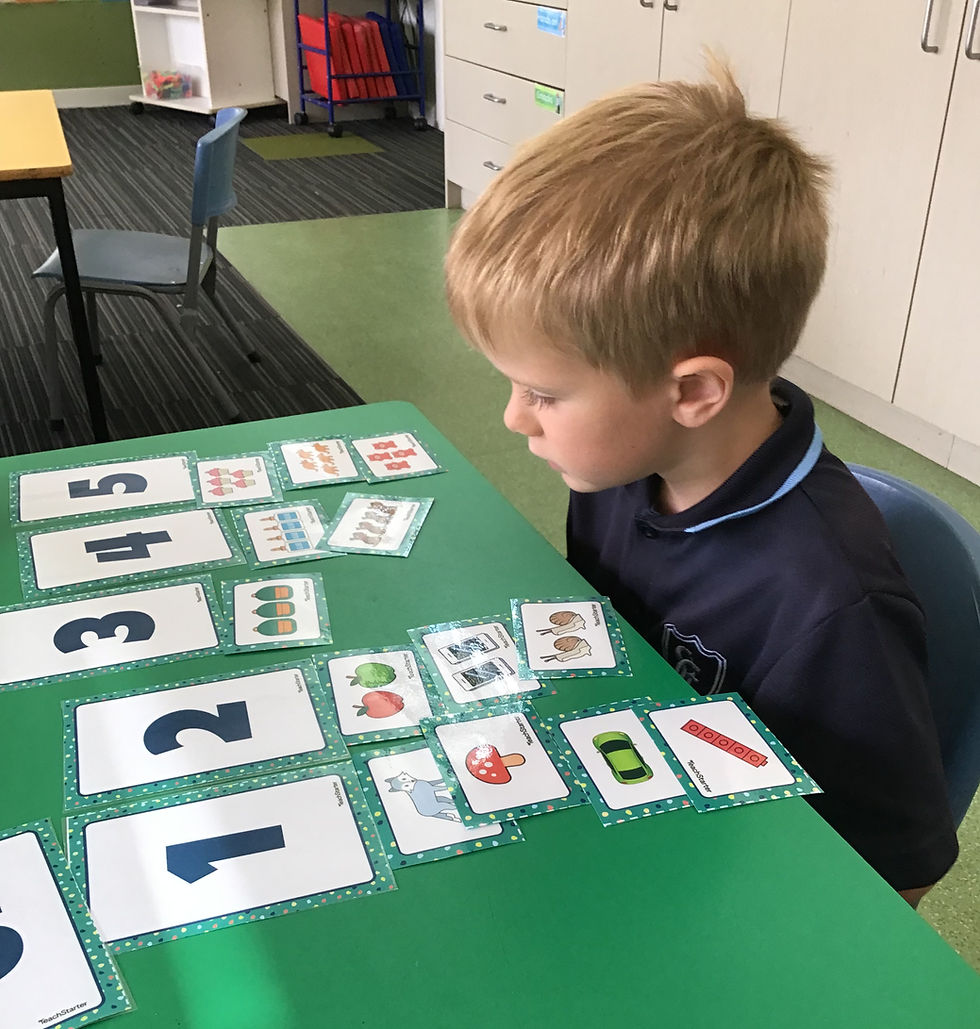
At St Catherine's, mathematics is taught through a structured and explicit approach that supports all students to develop strong numeracy skills and mathematical understanding. Our teaching  ensures learning is carefully planned and sequenced so that concepts build progressively from Foundation through to the upper primary years. This approach supports students to develop deep understanding by connecting new knowledge to previously learned concepts.

Mathematics lessons follow an explicit teaching model, where teachers clearly model new concepts, guide students through worked examples and provide opportunities for independent practice. Through this structured approach, students develop strong foundations in number, measurement, geometry, statistics and problem solving.

Students engage in a range of hands-on and interactive learning experiences using concrete materials, visual representations and mathematical discussions. These experiences help students build conceptual understanding and confidently apply mathematical thinking to real-world situations.

Our mathematics program also includes regular review and practice opportunities, allowing students to revisit and strengthen previously learned skills. This supports the development of fluency, reasoning and problem-solving abilities while helping students build confidence and independence as mathematicians.

Through explicit teaching, structured learning and engaging mathematical experiences, we aim to develop curious, capable learners who approach mathematics with confidence and perseverance.

Humanities

Humanities learning at our school supports students to develop an understanding of the world and their place within it. Through the study of History, Geography, Civics and Citizenship, and Economics and Business, students explore how people, communities and environments change over time.

Teaching in Humanities is supported through explicit instruction, where teachers introduce key concepts, model thinking and guide students to develop inquiry and research skills. Students learn to ask questions, analyse information from a range of sources and communicate their ideas in meaningful ways.

Learning experiences are designed to be engaging and inquiry-based, allowing students to investigate real-world issues and develop a deeper understanding of local, national and global communities. Students also explore Australia’s history, cultural diversity and the importance of active and informed citizenship.

Through Humanities learning, students develop the knowledge and skills to think critically, understand different perspectives and participate thoughtfully in their communities.

468592264_18254433850258410_2262641123071277152_n.jpg
Science

Science learning at our school encourages students to explore, question and investigate the world around them. Through the study of Biological, Chemical, Earth and Space, and Physical Sciences, students develop an understanding of scientific concepts and how science is used in everyday life.

Science is taught through a combination of explicit teaching and inquiry-based learning. Teachers introduce key concepts and model scientific thinking, while students are given opportunities to ask questions, investigate ideas and develop their understanding through hands-on experiences.

Students regularly participate in experiments and practical investigations that build skills in observing, predicting, recording results and drawing conclusions. These experiences help students develop curiosity, problem-solving skills and confidence in scientific thinking.

Our school also provides opportunities for exploration in our Discovery Room, a dedicated STEM-style learning space where students can engage in creative, hands-on learning. In this environment, students design, build, test and explore ideas using a range of materials and technologies, encouraging innovation, collaboration and critical thinking.

Through engaging learning experiences and scientific inquiry, we aim to develop curious learners who question, explore and discover how the world works.

SPECIALIST PROGRAMS
Auslan

At our school, students learn Auslan (Australian Sign Language) as part of our Languages program. Learning Auslan provides students with the opportunity to communicate using a visual language while developing an understanding and appreciation of Deaf culture and the Deaf community in Australia.

Through engaging and interactive lessons, students learn to communicate using signs, facial expressions and body language, which are important features of Auslan. Students develop vocabulary and simple conversational skills while exploring how meaning is expressed through movement and visual cues.

Learning Auslan also supports the development of communication skills, empathy and respect for diversity. Students gain an understanding of inclusive communication and how language can connect people from different backgrounds and experiences.

Through learning Auslan, students build confidence in using a new language while developing an appreciation for different ways people communicate and interact in the world around them.

IMG_4005.JPG
Physical Education

At our school, Physical Education plays an important role in promoting health, fitness and active lifestyles for all students. From Foundation to Year 6, students participate in regular, structured physical education lessons that build fundamental movement skills, confidence and a love of activity. Students at St Catherine’s take part in Physical Education twice each week, enjoying a wide range of activities on our spacious school grounds.

Our program focuses on developing movement skills, coordination, teamwork and fair play through games, athletics and structured physical activities. Students in the upper primary years also have opportunities to compete in zone and regional sporting events, and our Year 5 and 6 students participate in interschool sport during Terms  2 and  3.

We encourage whole‑school involvement in physical activity, including community events such as our weekly Running Club, our annual Ride to School Day and our annual athletics carnival, which are well attended by families and offer students a chance to celebrate participation and personal achievement. Students from Foundation to Year 4 participate in school swimming lessons and Year 5 and 6 students complete a Beach Safety Program.

Through quality teaching, inclusive activities and opportunities for competition and fun, our Physical Education program supports students to develop healthy habits, resilience and enjoyment of physical activity for life.

Performing Arts

Our Performing Arts program at St Catherine’s provides students with rich opportunities to explore creativity, expression and confidence through music, drama and movement. Students engage in structured lessons where they develop skills in singing, playing instruments, performance and storytelling, building both individual talent and collaborative skills. 

Across the year, students participate in a variety of performance experiences that celebrate their learning and creativity, including school concerts, St Catherine's Got Talent, Christmas Carols, class presentations and community events. These experiences allow students to share their work with peers, families and the wider community, fostering confidence and pride in their achievements.

Our program also encourages students to explore elements of drama and movement, giving them opportunities to express ideas, emotions and stories through body, voice and collaborative performance. Students build skills in rhythm, melody, improvisation and ensemble work, supported by specialist teaching and a caring learning environment.

Through our Performing Arts program, students develop creative voice, self‑expression and an appreciation for the arts, enriching their overall learning and school experience.

Screenshot 2025-01-15 173846.png
Visual Arts

At our school, the Visual Arts program provides students with opportunities to explore, create and express ideas through a wide range of artistic mediums and techniques. Students engage in lessons that develop skills in drawing, painting, sculpture, printmaking and digital media, building both technical skills and creative confidence.

Learning in Visual Arts is hands-on and inquiry-based, encouraging students to experiment, solve problems and make choices about their own artwork. Students are guided to explore colour, texture, shape, form and composition, while developing their own personal style and artistic voice.

The program also integrates art appreciation, allowing students to study the work of artists from Australia and around the world, including Indigenous art, to understand different perspectives, cultures and artistic traditions.

Through Visual Arts, students develop creativity, critical thinking and self-expression, and have opportunities to showcase their work in exhibitions, the Art Show, school displays and community events, celebrating their achievements and fostering pride in their artistic development.

Digital Technologies

At our school, Digital Learning is an integral part of our curriculum, helping students develop the skills, knowledge and confidence to use technology safely and effectively. Students engage with a range of digital tools to research, create, communicate and solve problems across all learning areas.

Our program focuses on explicit teaching of digital skills, including coding, computational thinking, online safety, and responsible use of technology. Students have access to robots for coding, allowing them to explore programming concepts in a hands-on and engaging way.

To support individual learning, students in Foundation to Year 2 use one-to-one iPads, while students in Years 3–6 have one-to-one Chromebooks. These devices enable students to collaborate, create digital projects and apply technology across the curriculum.

Students are encouraged to be creative and critical users of technology, applying their learning in authentic, hands-on projects such as digital storytelling, coding challenges, and multimedia presentations.

Through Digital Learning, students develop the skills needed to navigate a digital world confidently, responsibly and creatively, preparing them for lifelong learning and future opportunities.

BC1C1F31-5CDC-4E65-A6F1-E2D804250D6B.heic
Support and Extension

At our school, we are committed to meeting the learning needs of every student through tailored extension and support programs. Our goal is to ensure that all students are challenged to reach their full potential while receiving assistance to strengthen their skills where needed.

Students requiring additional support are provided with targeted programs that focus on literacy, numeracy and social-emotional learning, delivered in small groups or one-to-one sessions. These programs are designed to build confidence, address learning gaps, and enable students to access the curriculum successfully.

For students ready for more challenges, we offer extension opportunities across the curriculum, including inquiry-based projects, problem-solving tasks, advanced mathematics challenges, creative arts enrichment and participation in competitions. These programs allow students to develop critical thinking, creativity and independent learning skills.

By combining support and extension, we aim to create a learning environment where every student can thrive, grow and achieve their personal best.

Library

Our school library is a vibrant learning hub that fosters a love of reading, research and inquiry. It provides students with access to a wide range of fiction, non-fiction, digital resources and reference materials, supporting learning across all curriculum areas.

The library is more than a place to borrow books - it is a space for exploration, creativity and collaboration. Students engage in activities that develop literacy skills, critical thinking and information literacy, learning how to locate, evaluate and use information effectively.

With regular library lessons, students are guided to develop reading habits, participate in storytelling, explore literature from different cultures, and engage in research projects. The library also hosts Book Week, the Book Fair and reading challenges, inspiring students to explore new genres and authors.

Our library is a welcoming and inclusive space where students are encouraged to discover, question and enjoy learning, supporting their growth as confident, lifelong readers and learners.

bottom of page